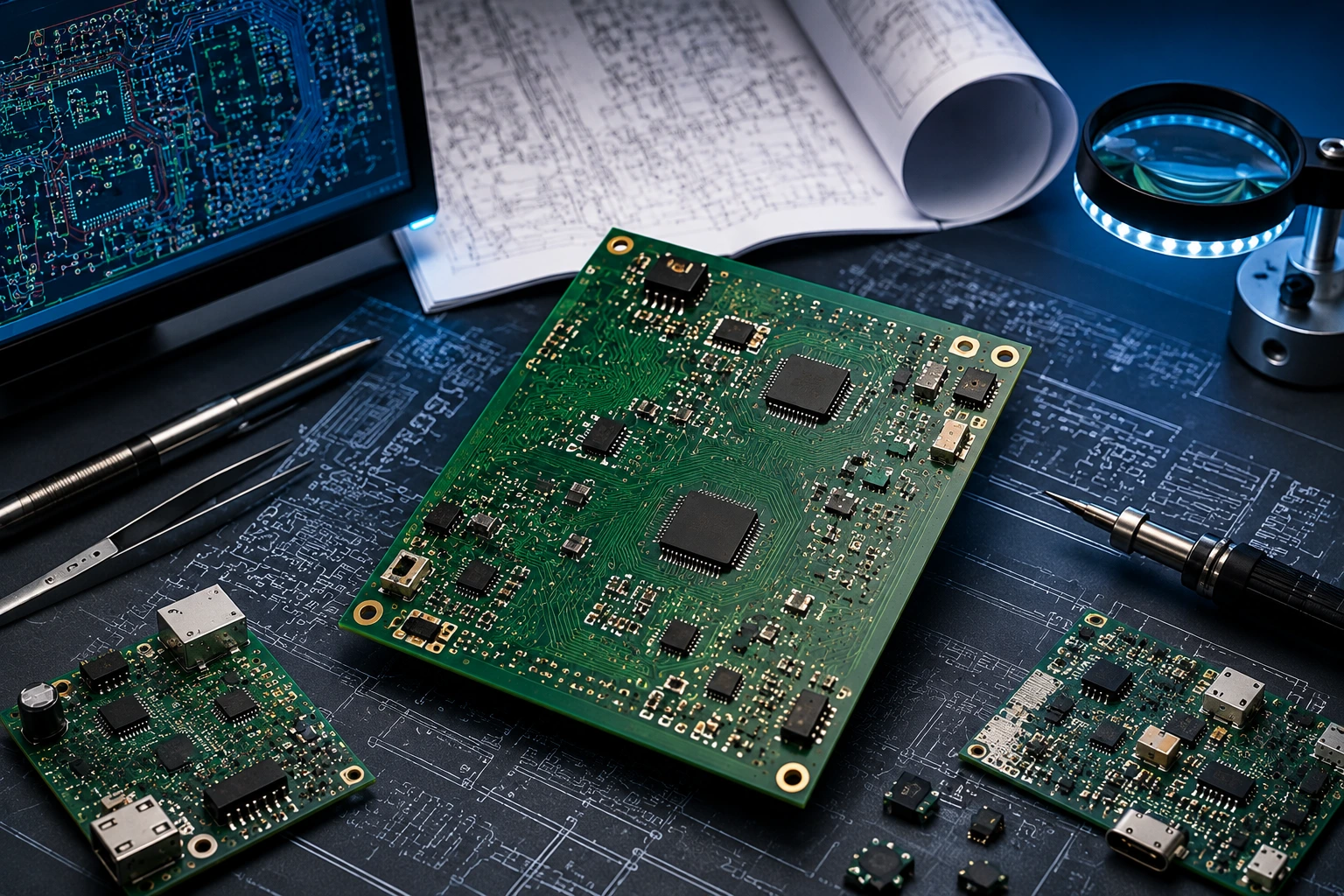
Printed Circuit Boards (PCBs) are the backbone of every electronic device, providing mechanical support and electrical connections for components. Whether you're developing a consumer gadget, industrial controller, medical device, or IoT product, selecting the right PCB is essential for ensuring reliability, performance, and long-term durability.
In this guide, we'll explore the key factors to consider when choosing the ideal PCB for your next project.
A Printed Circuit Board (PCB) is a non-conductive board with copper traces that electrically connect electronic components. Modern PCBs replace traditional wiring, making electronic products more compact, efficient, and easier to manufacture.
PCBs are found in almost every electronic device, including:
Single-layer PCBs have one conductive copper layer and are suitable for simple electronic circuits. They are affordable and commonly used in LED lighting, power supplies, and basic consumer electronics.
Advantages
Double-layer PCBs contain copper on both sides, allowing more complex routing and improved circuit performance.
Applications
Multilayer PCBs consist of multiple copper layers laminated together. They provide high-density routing and excellent electrical performance for advanced electronics.
Common Applications
The first step is understanding your product's operating environment and functionality. Consider temperature, humidity, electrical load, and mechanical stress.
Choose the appropriate layer count based on circuit complexity.
Selecting the right substrate improves durability and performance.
Common materials include:
Copper thickness directly affects current-carrying capacity.
Typical options include:
The surface finish protects copper pads and improves solderability.
Popular finishes include:
Working with an experienced PCB manufacturer ensures consistent quality, reliable performance, and compliance with international standards.
Look for manufacturers offering:
Poor-quality PCBs can lead to:
Investing in high-quality fabrication ensures better reliability, improved product performance, and reduced production defects.
At Coredot Circuit, we provide complete PCB solutions under one roof.
Our services include:
We combine advanced manufacturing technology with experienced engineering support to deliver reliable PCB solutions for startups, OEMs, and industrial manufacturers.
Single-layer PCBs are the most cost-effective option for simple electronic projects.
Multilayer PCBs are ideal for high-density, high-speed, and compact electronic devices requiring advanced routing.
Optimize your PCB layout, choose standard materials, simplify the design, and work with an experienced manufacturing partner.
PCBs are used in consumer electronics, automotive, industrial automation, medical equipment, telecommunications, aerospace, renewable energy, and IoT devices.
Choosing the right PCB is one of the most important decisions in electronic product development. Factors such as board type, material, layer count, copper thickness, and manufacturing quality all influence the performance and reliability of the final product.
At Coredot Circuit, we are committed to delivering high-quality PCB design, fabrication, and assembly solutions that help bring innovative electronic products to life. Whether you need a prototype or full-scale production, our team is ready to support your project with precision, quality, and on-time delivery.
OUR NEWS
No related posts selected.

Manufacturer Of Printed Circuit Board
© Copyright by Dnd Software

1 Replies to “How to Choose the Right PCB for Your Electronic Project”
Test 05 Jul 2026
test